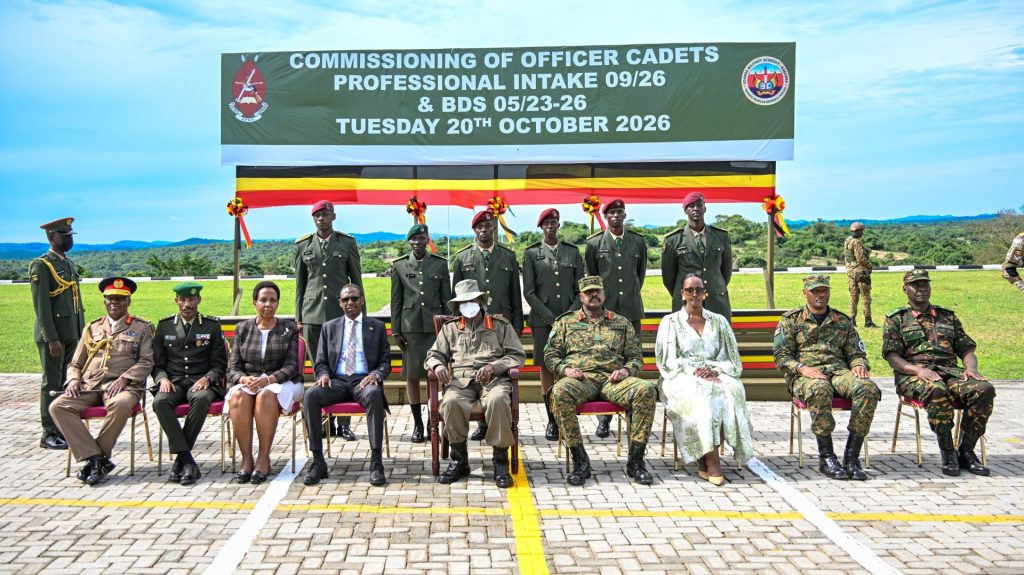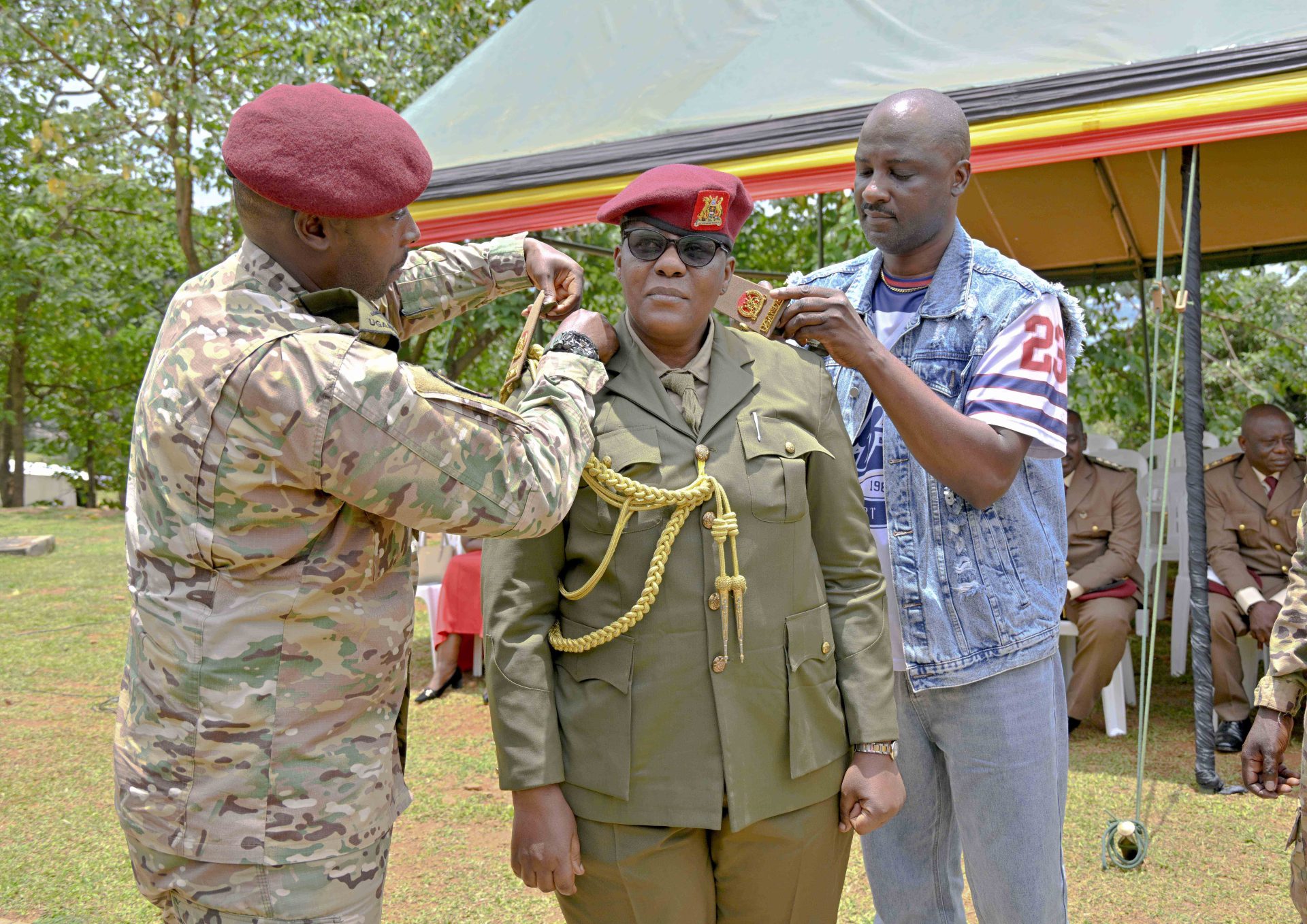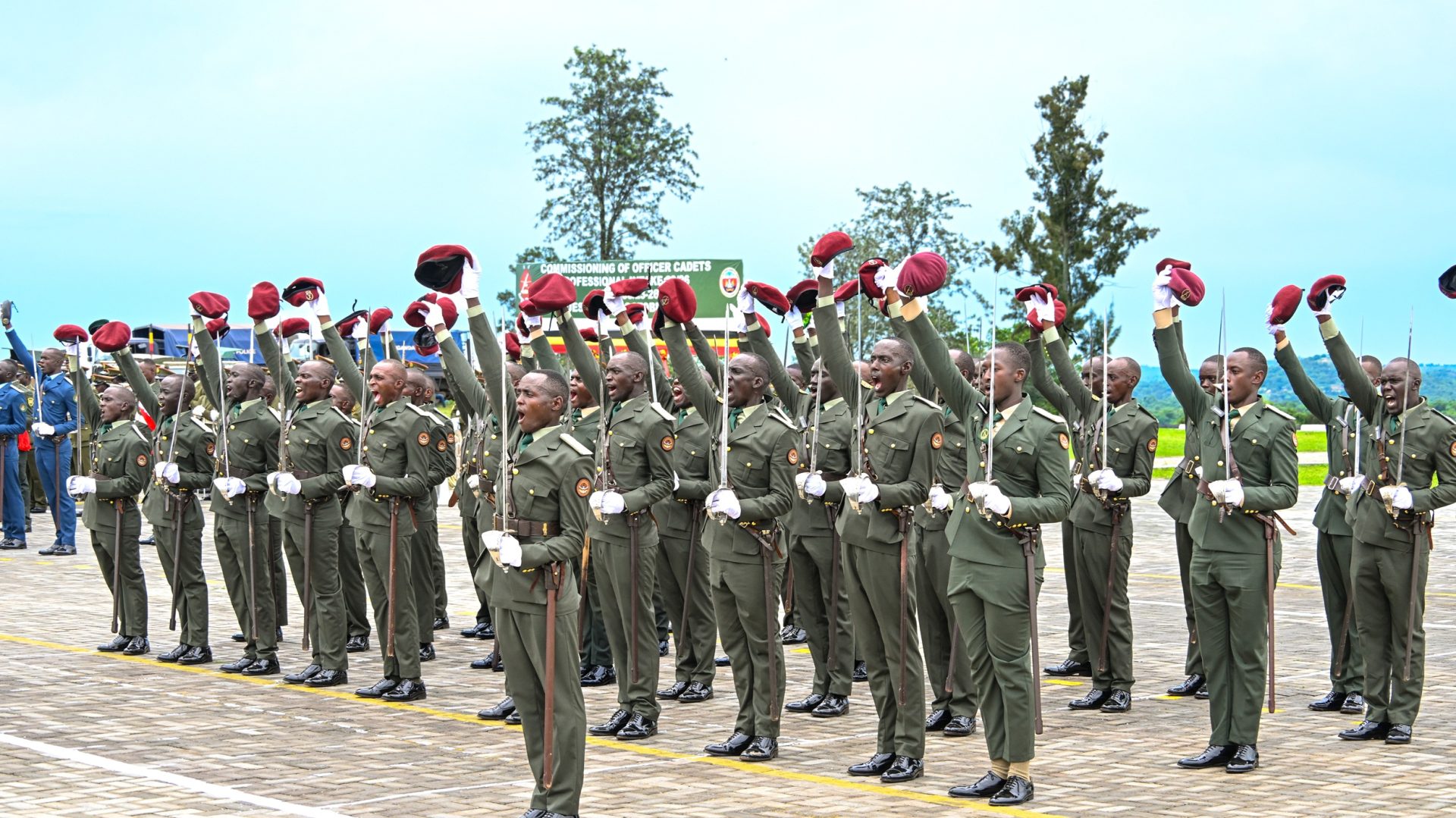

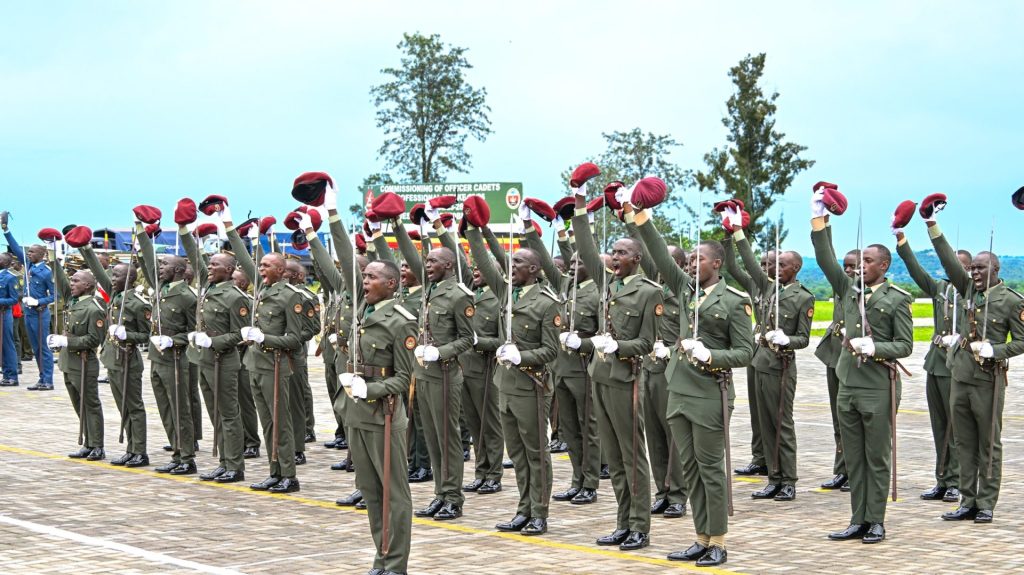
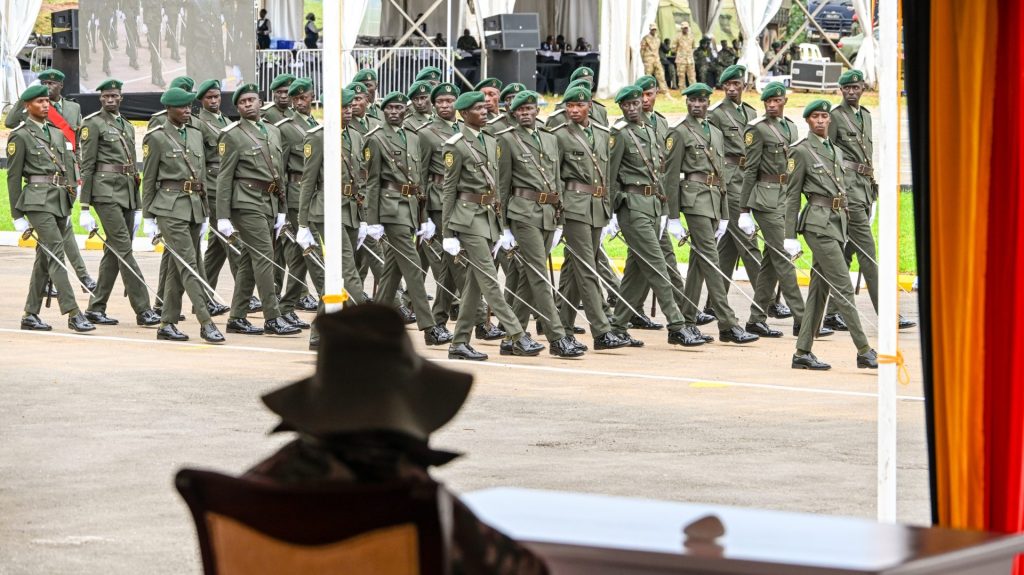
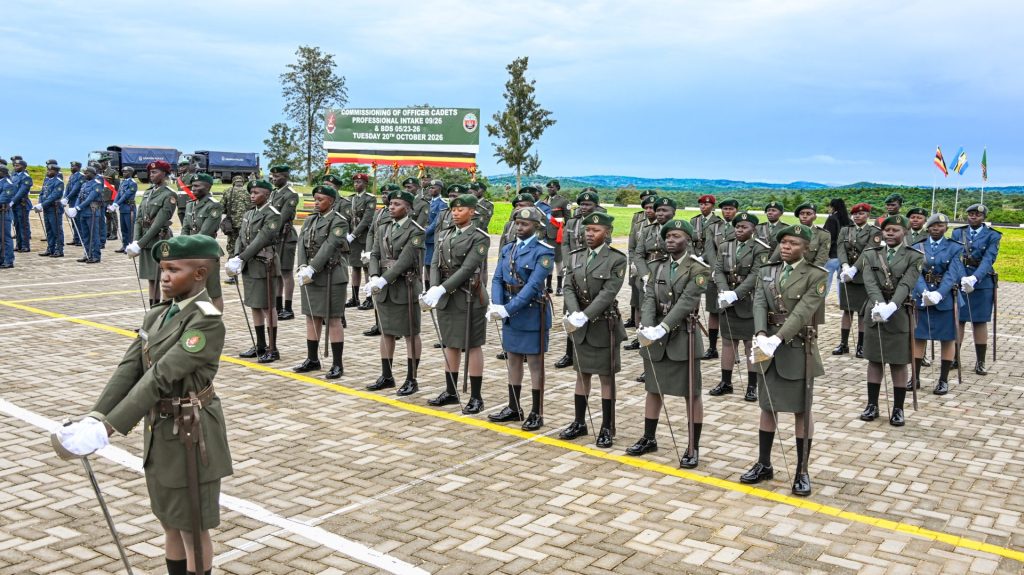
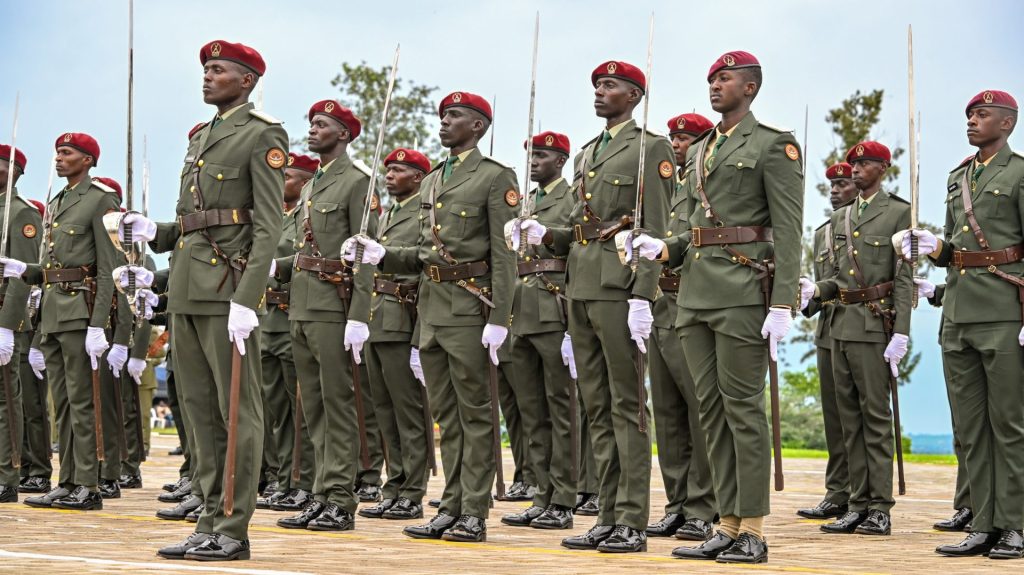
President Museveni, who is also the Commander-in-Chief of the UPDF, made the remarks today during the commissioning ceremony for Officer Cadets Intake 09/26 and Bachelor of Defence Studies Intake 05/23/29 at Uganda Military Academy-Kabamba in Mubende District.
The 280 commissioned cadets included 187 professionals who began training in February 2026 and 87 Bachelor of Defence Studies cadets who started their training on September 18, 2023. The latter class initially enrolled 100 cadets, but 14 did not complete the programme. Eleven of those commissioned are female.
Six additional officer cadets received training abroad, including Officer Cadets Ruhamya Kainerugaba and Andrew Bakira, who trained at the Royal Military Academy Sandhurst in the United Kingdom, while four others trained in India.
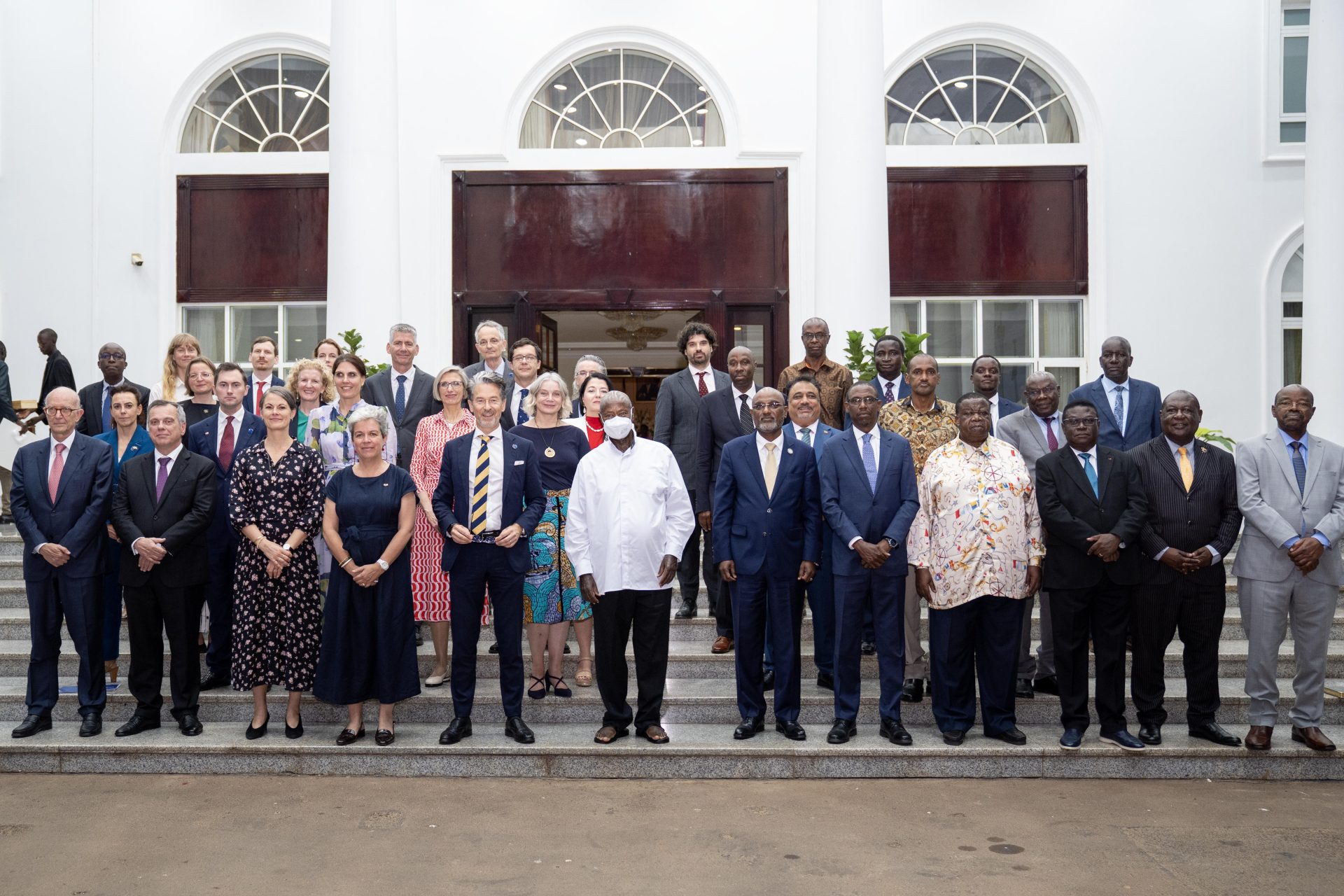
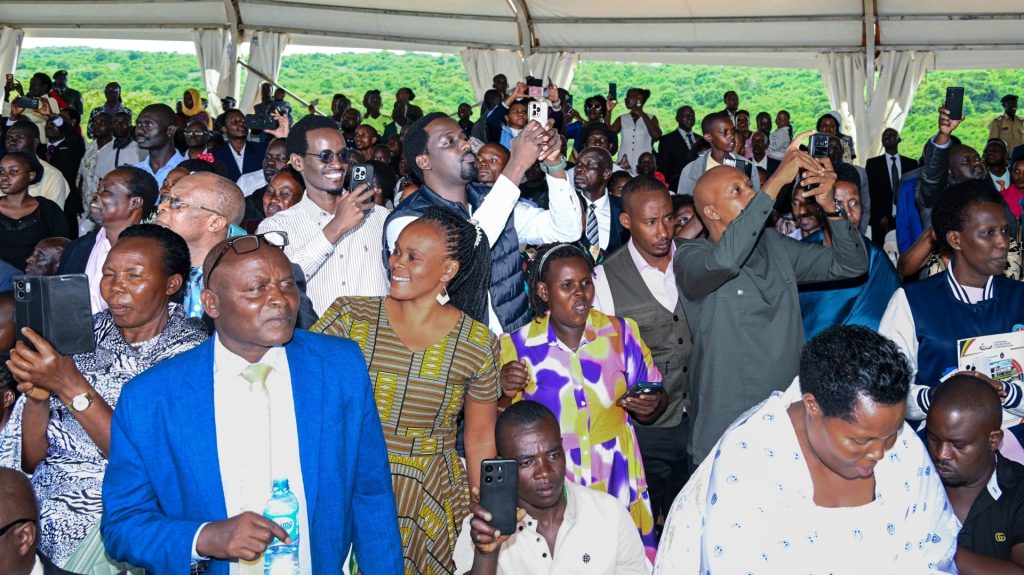
The ceremony was attended by Chief of Defence Forces (CDF) Gen. Muhoozi Kainerugaba and his wife, Mrs. Charlotte Kainerugaba; Defence and Veteran Affairs Minister Hon. Kiryowa Kiwanuka; Uganda Military Academy-Kabamba Commandant Brig. Gen. Saad Katemba; and other senior military officers.
Lt. Col. John Mugarura commanded the parade.
Outstanding cadets received awards for their performance before the newly commissioned officers took the oaths of allegiance and secrecy.
Economy key to strong National Defence:
Congratulating the graduates, President Museveni described their commissioning as the beginning of a long journey of service in an institution whose effectiveness depends on discipline, commitment and sound leadership.
“First of all, congratulations to the graduates. You have started a long journey in a very honourable organisation, the UPDF. If you do your part and don’t get diverted, you will make a good contribution,” he said.
He thanked the cadets’ families, the academy and the UPDF leadership for supporting their training.
President Museveni emphasised that a strong economy is one of the fundamental pillars of an effective national defence system, arguing that the military must work alongside other institutions to protect the country’s productive sectors.
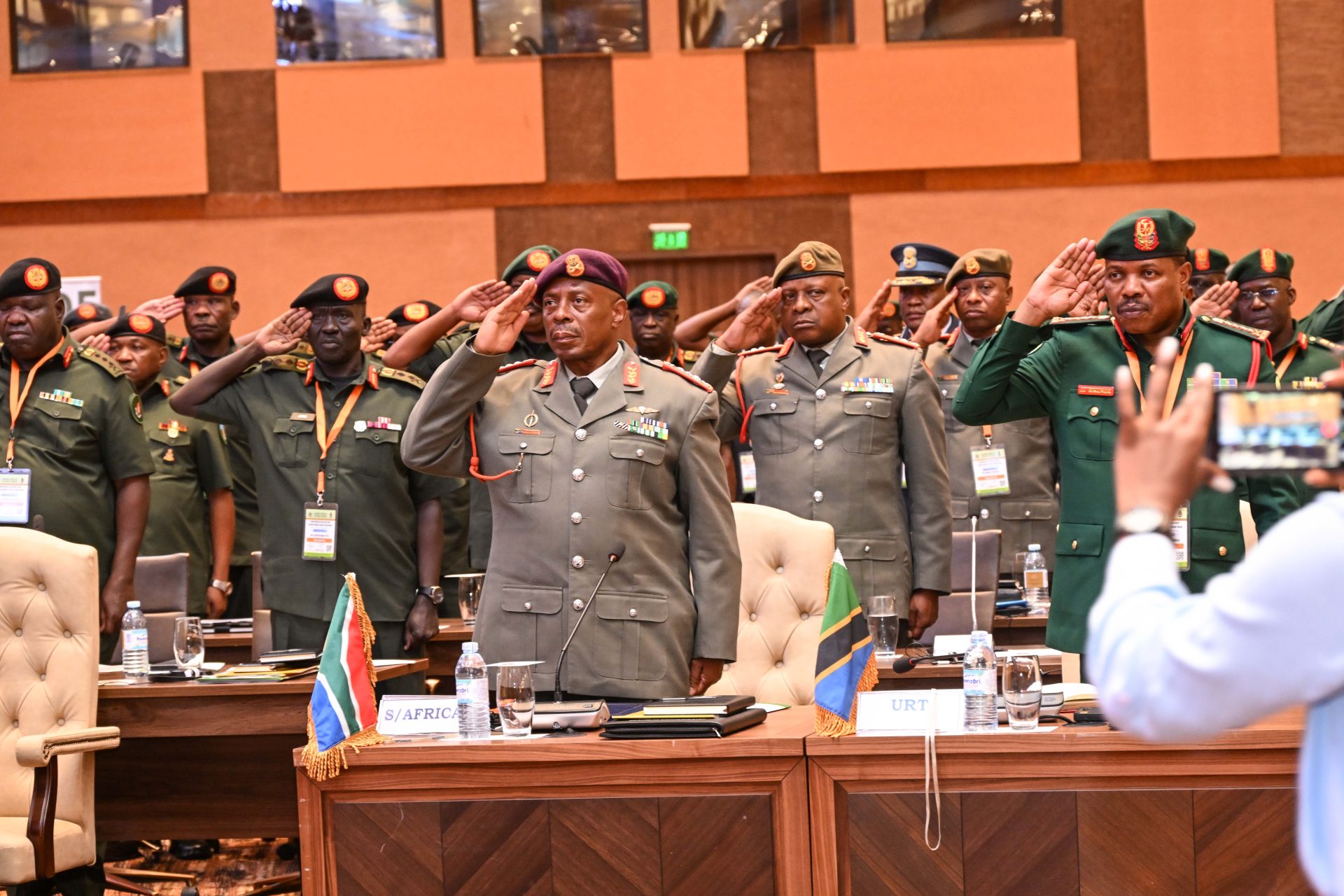
“Recently, I was talking to the CDFs from a number of countries, and I told them that to have a strong and effective defence of the country, you need a number of factors. One of them is a strong economy which will be able to support a strong army,” he said.
He urged military leaders to identify factors that undermine economic growth and cooperate with relevant institutions to protect wealth creation in commercial agriculture, manufacturing, services and information and communication technology (ICT).
The President also called for a firm response to crime in communities, particularly the theft of livestock distributed to farmers under the Parish Development Model (PDM).
“When you get thieves stealing the goats and cows from the farmers which have been given by the PDM, that’s sabotage. It shouldn’t be tolerated,” he warned.
He said such crimes undermine government efforts to improve household incomes and transform communities, calling on security agencies to ensure that farmers can benefit from government programmes without fear of losing their assets.
Discipline, technology and training:
President Museveni stressed that the relationship between the army and the population remains critical to national security, urging officers to maintain discipline and demonstrate respect for the communities they serve.
“The strategic relationship between the army and the people [is important]. The army must always make sure that it is like fish in the sea,” he said, recalling how public support helped the liberation struggle despite shortages of weapons.
He identified continuous training and the development of soldiers’ capabilities as another essential pillar of national defence.
The President also called for greater investment in science and technology, describing technological gaps as a longstanding challenge for Africa.
“We were still using arrows and spears when the Europeans were using gunpowder. It was that which caused problems in the last 500 years. Therefore, we must make sure that we enhance science and technology,” he said.
On regional security, President Museveni urged African countries to strengthen strategic coordination and build joint capabilities across land, air, maritime and space domains.
“We need to coordinate with our brother African countries to work together so that we create capacity on land, air, at sea and even space because that’s where the war is now,” he said.
He commended the CDF and other commanders for efforts to fight corruption and improve the welfare of soldiers, including better accommodation and pay.
President Museveni said the government would also prioritise modernising military training institutions, adding that the facilities should meet high international standards.
“I have told the CDF and his commanders that we need to prioritise these training infrastructures. They can be made state-of-the-art. It is good to have the best in the world when you are training from here,” he said.
He further urged the newly commissioned officers to safeguard their health, drawing on his own experience of maintaining an active life at the age of 82.
Reflecting on his decades of political activism and armed struggle, President Museveni said good health had been essential to his ability to serve the country over the years.
“When I look back and see the things I have gone through in the last 65 years, from the students’ movement to the armed resistance against Idi Amin and UPC, you can see that if my health had been compromised earlier, I wouldn’t have achieved all that,” he said.
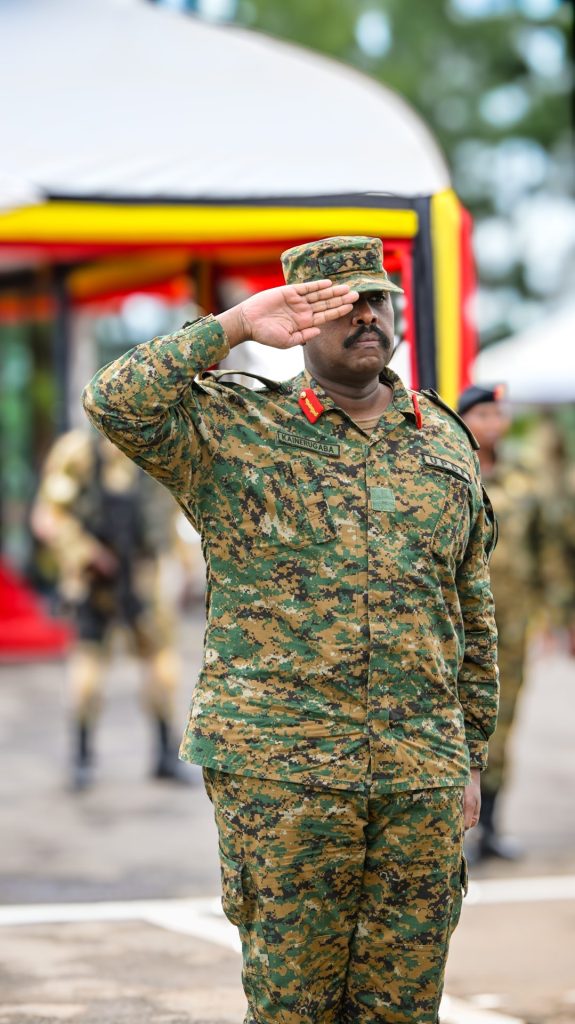
In his remarks, Gen. Kainerugaba said the security situation in Uganda and the wider region was relatively calm, with UPDF peace and stabilisation missions in the Democratic Republic of Congo, South Sudan and Somalia continuing to make progress.
However, he raised concern over an increase in violent crime in some parts of the country, where criminals were reportedly using machetes and, in some cases, firearms to rob, kill and sexually assault victims.
“However, on the domestic front, we have recently noted an increase in violent crime in some parts of the country, and this has caused a bit of unease in those affected areas,” he said.
The CDF warned that the security agencies would not tolerate the criminal activities and were coordinating operations to identify, arrest and bring the perpetrators to justice.
“No effort will be spared until the sanctity of the right to life and property is fully restored for all the people in our country,” he said.
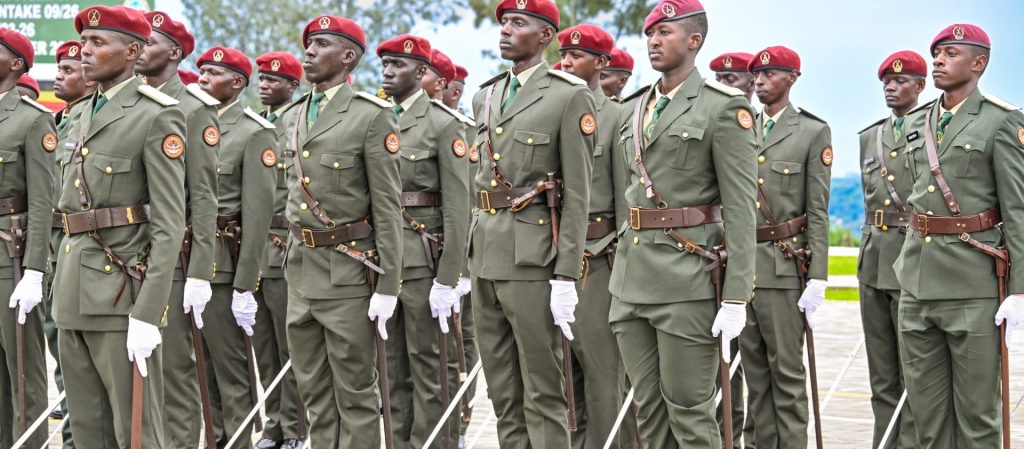
Gen. Kainerugaba thanked Ugandans for their continued support for President Museveni and the National Resistance Movement (NRM) government, crediting the President’s leadership with contributing to Uganda’s socio-economic transformation and regional peace and stability.
He said the welfare of soldiers and officers had continued to improve during his nearly three years as CDF, citing progress in pay, accommodation, administration, logistics, healthcare and education.
He added that the UPDF remained committed to strengthening training, acquiring equipment and improving troop welfare, supported by ideological and political education.
Gen. Kainerugaba commended instructors across military training institutions for their dedication and congratulated the new officers on their decision to serve the country.
“I urge you to immediately join your assigned units and gain experience. You are now the future of the UPDF,” he said.
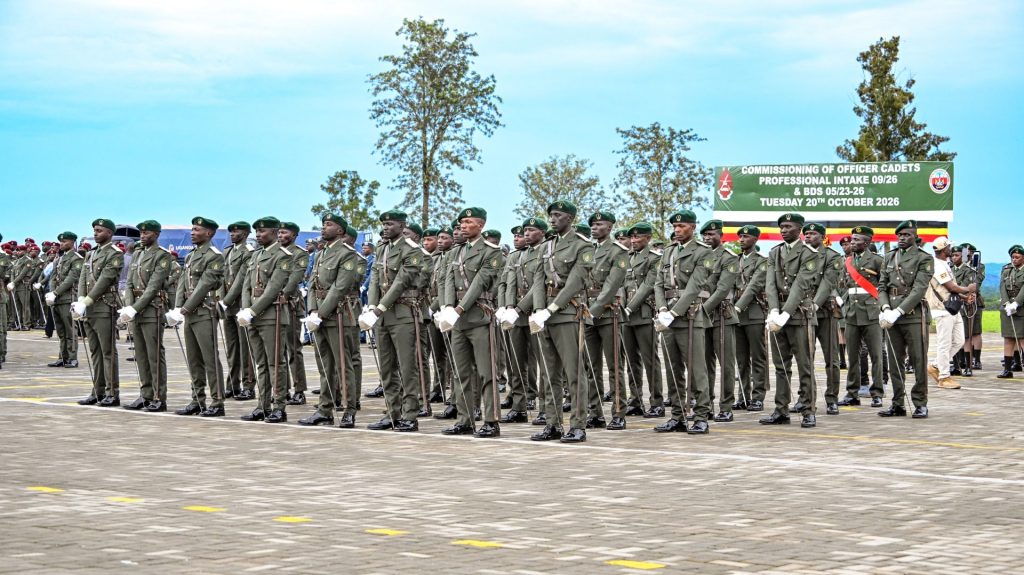
Defence Minister calls for professionalism:
Defence and Veteran Affairs Minister Hon. Kiryowa Kiwanuka said President Museveni’s presence at the commissioning ceremony demonstrated his commitment to national defence, military excellence and the continued professionalisation of the UPDF.
He said the President’s strategic guidance and investment had helped build a disciplined and capable force tasked with protecting Uganda’s sovereignty and territorial integrity.
Hon. Kiwanuka described the UPDF’s development under the NRM government as one of the key achievements of President Museveni’s leadership. He also commended Gen. Kainerugaba for efforts to improve troop welfare and combat corruption.
The minister recognised the Joint Staff Training and Doctrine leadership for overseeing and standardising training across military institutions, while applauding the Kabamba Military Academy commandant and staff for equipping cadets with the knowledge, skills and values needed for effective military leadership.
He also highlighted cooperation with regional partners, including Kenya, Rwanda and Tanzania, through joint training and professional exchanges.
“Cooperation through joint training, professional exchanges, and sharing of mutual experience strengthens our defence institutions, enhances interoperability, and builds mutual trust,” he said.
Addressing the newly commissioned officers, Hon. Kiwanuka urged them to uphold integrity, discipline and constitutional loyalty, reminding them that leadership was measured by service and responsibility rather than rank.
“Wear your uniform with honour. Lead with integrity and discipline. Remain loyal to the Commander-in-Chief and the Constitution of the Republic of Uganda,” he said.
He further urged the officers to place their mission, the welfare of their soldiers and the interests of Ugandans above personal ambition.
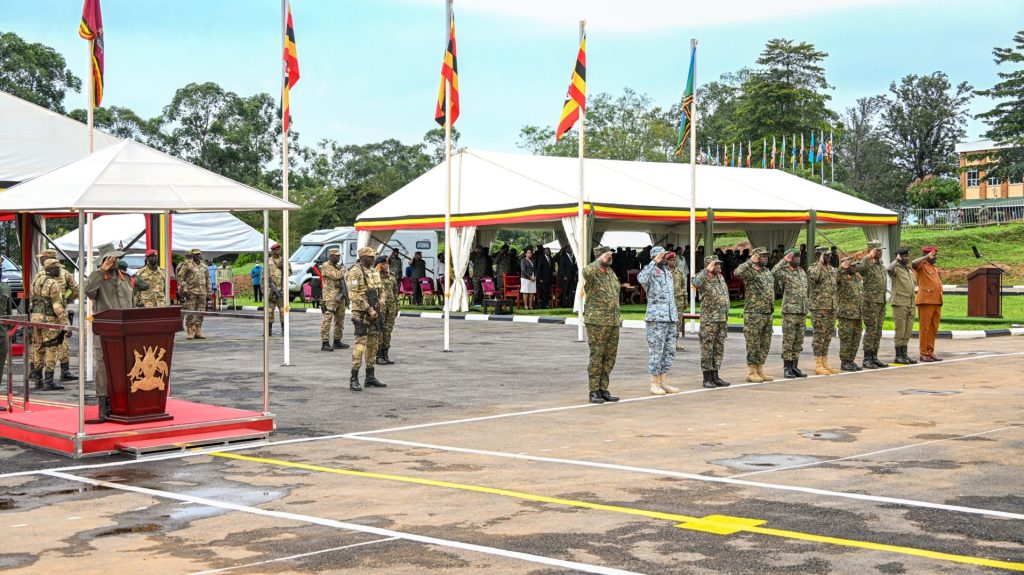
Academy pledges continued improvement:
Uganda Military Academy-Kabamba Commandant, Brig. Gen. Saad Katemba said the training programme combines academic instruction with military preparation, emphasising sustainability, ideological grounding and leadership competencies.
He thanked the lecturers and instructors for sharing their knowledge and experience with the cadets, noting that the academy was developing its infrastructure in line with the President’s strategic guidance.
Brig. Gen. Katemba also thanked the CDF for supporting improvements in troop welfare and expressed optimism that the academy would continue receiving the resources needed to strengthen training.
He commended the graduates for their endurance and resilience but cautioned them against individuals or groups that might seek to undermine their professional development and commitment to national service.
“Be aware of manipulative interest groups who are envious of your hard-earned competences and may try at any cost to divert you from the strong foundation and the legacy of the institution and national ideology,” he said.
The commandant also acknowledged the contribution of spouses, parents, relatives and friends who provided material, spiritual and psychological support to the cadets throughout their training.
He thanked residents of Kasambya in Mubende District for their cooperation and patience despite the noise associated with military training activities.
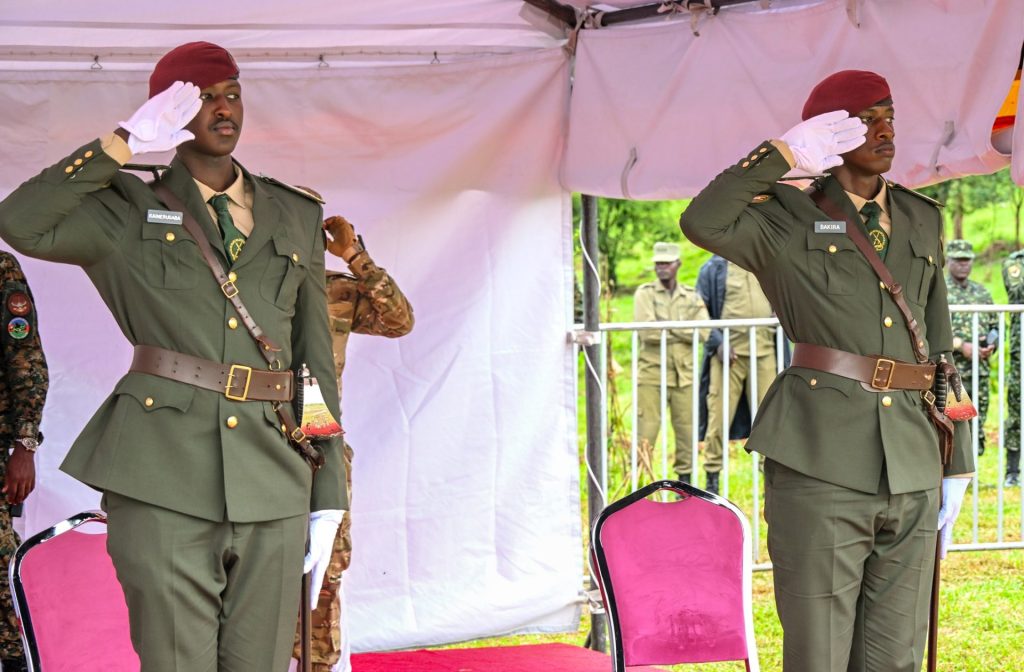
Top-performing cadets recognised:
The ceremony concluded with the recognition of cadets who excelled in different areas of training.
Officer Cadet Enos Kugumaho from the Special Forces Command (SFC) was named the overall best performer, while Officer Cadet Gloria Kwakunda, also from SFC, emerged as the best in class.
Officer Cadet Derrick Hongoro from the Land Forces was recognised as the best in field, while Officer Cadet Shemack Abreziz from Kenya received the award for best in tactics.